
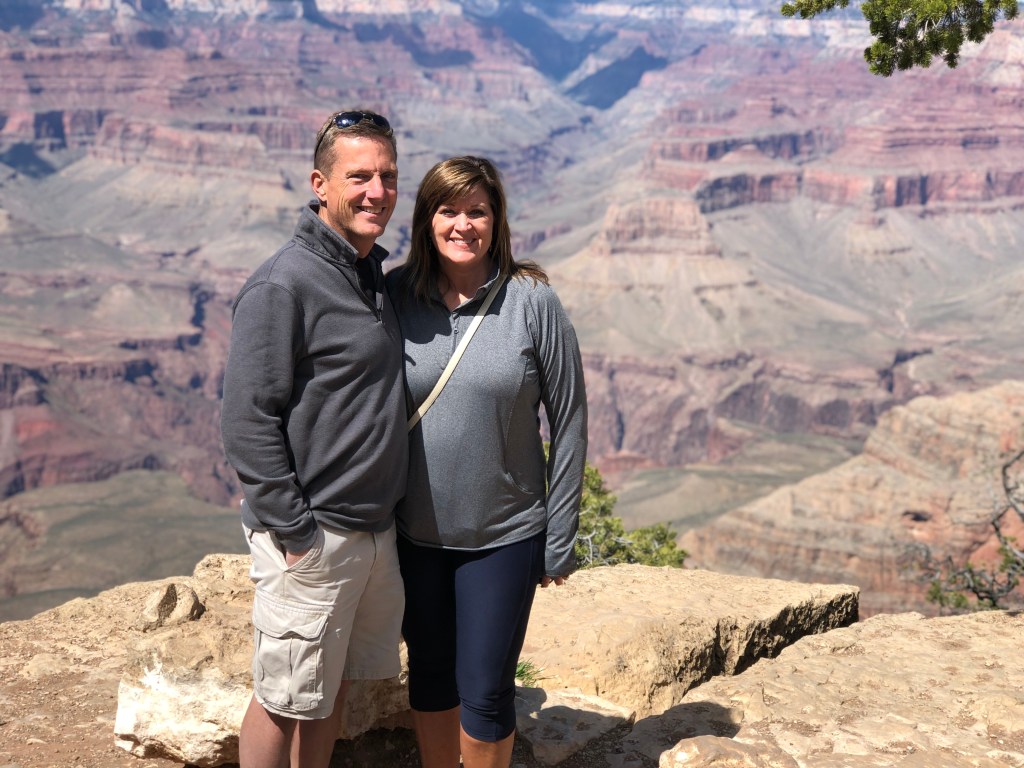
In mid-July 2020, right around his birthday, my husband, Kevin, began complaining of headaches. Headaches were unusual, but it was a hot summer, and we initially chalked it up to dehydration and overworking. Weeks went on, as did the heat, and as did the headaches. Kevin generally was able to lie down and gain relief. But in August, we made a trip to urgent care.
words + photographs Sandi Zwingle
We sat in the exam room waiting, and he casually made a comment about not wanting to be there because he didn’t want them to tell him something was wrong.
After a quick exam, it was deemed he had a sinus infection. That was a relief to us both, and we left to pick up an antibiotic. Five days after our trip to urgent care, he woke me up at 5 a.m., standing in the doorway of our bedroom. He was unable to walk back to bed. He said his leg was numb. Sometimes his Rheumatoid arthritis causes similar symptoms, but after weeks of persistent headaches, five days of antibiotics, and now a numb leg and inability to easily walk, I wasn’t convinced he had a sinus infection. It was odd and scary, but he wanted to go back to sleep. Instead, after some discussion, we headed to the emergency room.
Kevin and I met more than three decades ago. He was adorably handsome: blond hair, blue eyes. Kevin was a young man from a small town. I was just trying to finish my degree at Missouri State University without distractions.
After a chance meeting, I knew right away he was hard working and genuine. Anyone who knows Kevin knows nothing is halfway. He’s all in in everything he does. Nothing less than perfection will do. He approaches life with persistence, tenacity and, once he’s determined to do something, he doesn’t stop until it’s done. I can recall so many stories of him working 48 hours straight just to finish. I laugh a little, but I also smile, as that is just the core of who Kevin is.
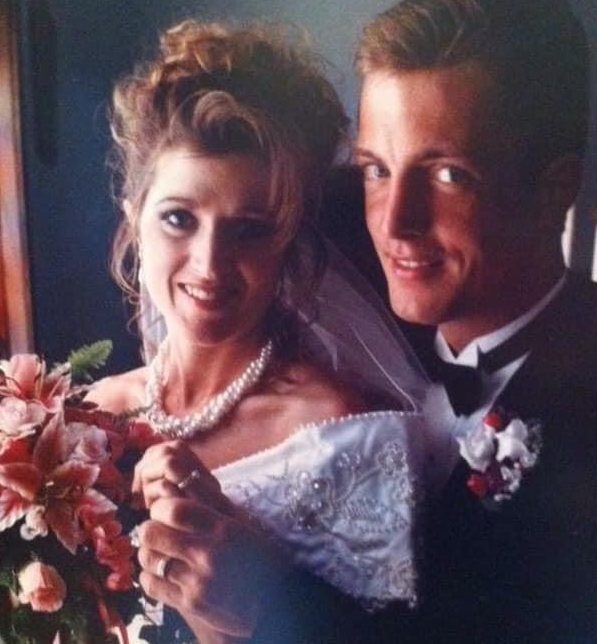
Soon after our introduction, we were pretty much inseparable. We married on May 20, 1995, in Kevin’s hometown of Greenfield, Missouri. Our marriage has been good, and we have always been happy to just be together and celebrate milestones along the way. Our goals have been similar, and our strong, supportive families have been close by. God blessed us with two pretty incredible children, Peyton and Zack, who over the course of their very young, adult lives have demonstrated maturity, strength and compassion – leaving me in awe on many days.


Both our daughter and son came into this world in grand fashion. Peyton, our first, came via emergency caesarian section. Recovery for me was challenging, but we found our way through. Zack surprised us all by arriving two months premature. After 17 days in the NICU, he came home to complete our little family.
Kevin and I were in alignment of the values we wanted to instill in our children. While we all had fun, they knew what it meant to work hard and take responsibility for their actions. We raised them in church, and they knew when they were struggling or had hard decisions to make, they were encouraged to rely on prayer for direction or comfort.
When Peyton and Zack were small, we lost Kevin’s sister to cancer. Certainly not something we were fully prepared to take on so early in our marriage. We knew she was an immense believer, and we had peace knowing we would see and walk with her again. I attribute much of Kevin’s good health to her advice so long ago. She worked as a nurse practitioner and quite frankly helped us to understand some pretty drastic measures necessary to ultimately save his life.
A few short months after his sister’s passing, Kevin had surgery to remove his entire colon in 2006. That surgery can only be described as wicked and likely one of the most difficult things I’ve ever watched Kevin endure. Many days were spent in the hospital.
The following years saw more surgeries, which meant more time in the hospital. While not fun or easy, Kevin was physically and mentally strong, and we fought through the valleys. As I think back, I just remember being exhausted – but happy – he was healthy, and we could move on with a seemingly normal life.
I never doubted our life wouldn’t be normal. Kevin is no stranger to pain and setbacks due to health as he’s learned to live with Rheumatoid arthritis and GI issues the majority of his life. I am often amazed at just how much he works through stuff and the toll he pays. I feel I constantly have to remind him to be good to his body and allow it to recover once in a while. I say remind, but if asked, I’m sure he would describe my encouragement as otherwise.
These events collectively were making up the chapters of our story.
Late in 2014, I learned I had breast cancer. Although it was a bump in the road and all is well now, for a moment, it was a very uncertain time for Kevin and I. We had to make some tough decisions, and I recall praying many days just asking the Lord for peace and contentment for our decisions. As with every other time, we made it through together and really didn’t look back. These events collectively were making up the chapters of our story.
Two thousand twenty quickly became a year to be remembered by all for so many reasons. It was a year that challenged our entire nation and extensively altered the course of normal. Nothing was normal. Everyone had to learn to adapt and exist in the absence of others, or at least with only those in immediate family units. For Kevin, this wasn’t entirely a challenge as he was accustomed to working alone. He had been spending a lot of time at the family farm. His father had passed a few years prior, and Kevin enjoyed working on the land.
Remember how I said Kevin innately possessed an all-in, perfectionist attitude? Working the family farm was no exception. He poured hours into shaping it up, organizing equipment and generally spending time doing what he loved. If it involved a tractor, lawn mower, dirt or the outdoors, Kevin was happy. It was not uncommon for him to come home after a 12-hour day, exhausted, only to go back the next day and do it all over again. Kevin grew up on a farm and had a special talent for knowing just about anything about everything. He would talk about something needing to be done or fixed. If I ever doubted him, he could easily prove me wrong. He has a talent, point blank and period. On occasion, we would spend time at the farm together on the weekend. I would tag along to ensure he wouldn’t work too much or too hard and of course, to spend time together.
In the wee hours of that August morning, after Kevin wasn’t able to walk back to bed on his own, we arrived at the emergency room. I was anxious, but I knew we would finally receive answers. I recall thinking how unfair, bizarre and almost cruel it was I would not be permitted to stay with him due to COVID-19 restrictions. It was an awful feeling. I put him in a wheelchair and once he was checked in, I went to work to wait and to have a distraction. I just remember thinking I’ve always been there for him, and my heart was breaking he had to go through this time alone.
At 2 p.m., he called saying he was ready to be picked up. Surprised and happy, I raced to the hospital. He was waiting outside. I quickly realized something was amiss.
When I asked him what the doctors found, he indicated not much and to follow up with our family physician. He wasn’t communicating clearly, and his leg still seemed compromised. I wasn’t happy with this. I called the emergency room to speak to the attending physician to better understand her findings. She indicated scans were clear. She said Kevin had been communicating fine with her, and he had been able to demonstrate proper leg movements during her evaluation.
Now I was frustrated.
Something was still wrong, but Kevin just wanted to go home to lie down. Lying down was the only way he found relief from the headaches. We medicated at home with over-the-counter pills. Nothing relieved the pressure. We took a trip to our family physician. She sensed blood pressure and cholesterol issues and wanted to treat those possibilities. Additionally, she recommended a neurologist referral as an aside, as she felt he was having a type of migraine – and just in case her suspicions were not the root cause of his headaches.
We were agreeable and excited as we managed to schedule a quick appointment with a neurologist that purported to be a headache specialist. Our visit with him seemed good, and he prescribed medication he claimed would offer Kevin some relief and us some hope.
The new approach did not make an impact. I was concerned as Kevin continued to travel to the farm to work. He was alone daily in this seemingly more compromised condition. The heat continued. He was driving, working on machinery, not feeling well.
I began noticing cognitive changes. He was not able to think as clearly as he once could. Decision making of the most basic tasks was difficult. Kevin assured me he was fine and continued to make the trip oftentimes daily, until he could not. I was persistent and unwavering with my communication to the doctor, asking for something different. I explained the headaches were continuing to claim most of Kevin’s days. I again explained relief came only when he was lying down, and even then pain never went completely away. Kevin loathed being idle, but many days it was all he felt like being. I knew this wasn’t right, and yet I didn’t know what to do other than be vocal. I continued my communication with the neurologist. He changed medication once again and assured us both we had to break the headache cycle. This medication would do it. His rationale sounded reasonable. Over-the-counter medication was causing rebound headaches. OK, I thought. I’ll buy that. The new medicine caused Kevin to be extremely lethargic and rendered him unable to perform many daily functions. His days were spent in bed with very little activity. I was awakened one night to a loud crash. Kevin had gotten up to use the restroom. Due to the medication, he got up, blacked out and had hit the dresser. He was lying in the floor with a pretty good size bump on his head. At that moment, I was feeling so many emotions. I was scared, mad, heartbroken, nervous, tired.
I helped Kevin back to bed, and we kept ice on his head until morning. I prayed he could find some relief and for the Lord to move us toward answers. We saw the neurologist that day. He adjusted his medication – with an exasperated again – and made yet another change. I continued to press for finding answers to what was wrong versus continuing to mask the symptoms with medication. He scheduled Kevin for some added scans as the new medication was having no impact on the situation.
I was sure I had offended this physician, this specialist, but I knew Kevin’s wellbeing was far more important.
One final email to the doctor was a desperate plea for answers versus bandages. The doctor responded and suggested I see another neurologist in the group for a second, or alternate, opinion. I eagerly agreed, and we had an appointment in a few short days. I was sure I had offended this physician, this specialist, but I knew Kevin’s wellbeing was far more important. I felt a sense of relief we may finally receive new perspective and possibly answers.
As we waited for contact with the next neurologist, my prayers were just for answers. Or for someone who could just tell us what was wrong.
Dr. Ben Lisle was young, quiet, kind and asked a lot of questions. He noticed things about Kevin and asked more questions. I began to share how Kevin was doing things that didn’t seem normal and that he was having issues processing what should be normal tasks. Dr. Lisle ordered more extensive, comprehensive scans, but due to the complexity and length of the workup ordered, it would be some days before those tests could be done. Our appointment was for Oct. 14 at 6:30 a.m.
In the days leading up to the tests, Kevin traveled to the farm to finish working on a piece of equipment. I was not thrilled he was driving, but he was determined to fix a door handle on the farm tractor. He would come home exhausted, and would talk about how his headaches were continuing to make things difficult. He wasn’t able to finish the handle repair and left things ready for a different day when he felt better.
The day of our appointment arrived. We laughed about not making the bed when we left at 6 a.m., saying we would just come back home and go back to bed since it was such an early morning for us.
Kevin happily is an early riser, but not me. I was just fine with the plan to come back home for a few more hours of sleep. The tests were lengthy and after a few hours, we left the hospital and Kevin wanted to eat. I was also good with that, so we went through our typical routine of neither of us being able to decide on where exactly we wanted to eat. It’s comical most times, and this really was no exception. I knew he didn’t feel well, so I tried to be more accommodating. We debated and drove in circles for a few minutes before deciding on The Big Biscuit on South Campbell.
We walked in and were seated immediately. We began studying the menu, but Kevin was notably having trouble making a decision. He was having a hard time processing the overwhelming selection of choices. His eyes were empty and at this point, I wasn’t sure if he would even eat had he ordered. It was no accident God had a hand in our decision to not drive back home to Nixa on the morning of Oct. 14. Nor was it an accident God placed us in this restaurant.
“Something is not right,” Kevin said. He wanted to get up and leave, but I asked him to sit for a minute. He began having a seizure. I was in a panic. I jumped up to hold him close to me and asked someone to call an ambulance. Our waitress did so immediately. The manager came over and helped me to physically restrain Kevin so he would not fall out of his chair. That in itself was commendable and the epitome of a Good Samaritan. What the manager did next will never be forgotten.
He prayed.
He prayed for Kevin the entire duration of his seizure. He prayed without ceasing. He helped me hold Kevin the entire time. Who does this? A complete stranger praying for Kevin. Praying for us. An ambulance arrived and the first responders stabilized Kevin and returned him to the hospital wearing the same wristband he was issued just a few hours prior.
I called the kids on my way to the hospital, not knowing what to tell them. COVID-19 prevented them from visiting, but I wanted them to be aware of what unfolded so they would pray for their dad.
After some swift action by all the emergency room doctors, I was asked to review an image of a scan they did upon his arrival. The scan showed a brain bleed. I’m not adept at reading or interpreting any type of X-ray or MRI, unless things are pretty well outlined for me. This was pretty clear. A large, dark mass was apparent, and I was told this was a large bleed, that it likely was the cause of his headaches. While relieved to know what was causing his headaches, I couldn’t help but to ask why this was not apparent in his other scans done in the weeks prior. They reviewed the previous scans and showed me. The bleed hadn’t been visible. Frustrating, but it seemed to answer the question: Why this, today? Kevin was quickly prepped for surgery and would have a procedure to drain the excess blood in his head. I sat in the waiting room. Alone, teary, praying. I asked God to guide the hand of the neurosurgeon and his team. I prayed for a quick recovery. I prayed for Kevin to be back to his normal self. Kevin and I have done hospital recovery before; I was confident we would handle this one in the same fashion. While scary, I was relieved to know we would soon be done with headaches.
“I had a little surprise,” the neurosurgeon said after the surgery.
Dr. Salim Rahman‘s words were a bit of a gut punch, but I listened. He explained upon performing the intended procedure, he noticed the covering of the brain did not appear a normal color. He opted to do a more extensive surgery (craniotomy) whereby he removed a portion of the plate covering the brain to gain a better view. He removed tissue samples to biopsy to have a better understanding of why the discoloration. Otherwise, he was able to successfully drain the blood, and Kevin was expected to do well. He would be in the Neuro Trauma ICU for a few days before moving to a regular room.
In hindsight, I wish I had been better prepared for his condition those first few days. The brain is an interesting organ. This recovery would be like no other we have done together. Each time after leaving my very limited daily visit, I would cry. I would cry and then pray. My prayers were to allow him to return to normal and for him to be calm and able to rest.
After two to three days in the Neuro Trauma ICU, Kevin began to return to a more normal state, talking more but still with a pretty flat effect. After five days, he moved to a room on the Neuro floor, where they specialize in stroke cases. I was happy he was on a specialized floor with a nursing team experienced in this type of care. After visiting him, I could sense things might still not be right. Frustrated, I continued my prayers for him to recover. I just wanted him to come home.
Within a couple of days of being in a regular room, Kevin was released, and I was excited he would be home. I arrived to gather his items and help him change clothes. He was having trouble finding words. I stepped out to speak to the nurse who came to evaluate. Within three minutes, Kevin’s room was filled with a rapid response team of about 10 people. They determined Kevin was having another seizure. He would stay another night. As I left, I recall praying, nearly begging for God to heal Kevin. I just wanted all of this to be over.
Kevin was released the next day. Again, I picked him up. Again, we headed home. Peyton was there, waiting to see her dad. She was as excited as I was. On the drive to Nixa, Kevin was quiet, a little restless and didn’t seem to feel well. When I opened the car door, I told Peyton I felt something still wasn’t right. She agreed, and we worked to convince Kevin we needed to return – again – to the emergency room. He still wasn’t communicating well, but it was well enough to tell me he just wanted to rest a while. We were agreeable.
While every fiber of my being could not stand the thought of a trip back to the emergency room, I knew he didn’t need to be home. We called Zack, who was at work, so he could physically help us with getting Kevin back to the hospital. During check in, they allowed me to remain since Kevin was not fully communicating. The next 24 hours were very likely the worst time of my life.
Dr. Lisle came to examine Kevin.
As I write, I am physically sick recalling what I had to watch Kevin endure. A small part of me, while I wanted to and always have been with Kevin through it all, was relieved I would not be allowed to remain with him when they moved him back up to the Neuro floor. I was simply trying to make it outside without crying.
I wondered if he even recognized me during this time.
I waited outside for Peyton and Zack to pick me up. Sobbing. I remember just telling them I hope he didn’t remember what he went through: how he was confused, unable to talk or communicate, how he had trouble walking, how he was agitated. I hoped he didn’t remember being restrained for a few days. Or how unsettled he was. I wondered if he even recognized me during this time.
We all prayed for answers. The days ahead were dark and filled with uncertainty. Dr. Lisle was honest and told me he wasn’t certain the cause for his condition. They, including Dr. Robin Trottman, continued to look at samples from the brain, perform countless CT’s and MRI’s, etc. We even discussed if treatment elsewhere should be considered. With each phone call, the doctors reminded me they were looking at everything – and they did not want to find the things they were looking for – as it was all very severe, bad stuff.
I was desperate, scared and beginning to wonder if life would ever be normal again. Thoughts raced through my head. I had no idea what was happening, and I struggled to keep myself focused. I wasn’t eating; I spent my days crying, unable to work. I found myself relying on my children to get me through. Zack quickly stepped up and took on all the duties at home Kevin would have handled. My baby – he was such a man. I was proud. Peyton was my optimist. The roles reversed, and she mothered me and helped me see the good in each and every day.
Each night, after the one short visit I was allowed with Kevin, I would come home and Peyton, Zack and I would pray: out loud and through tears. I recall both kids saying, “Just put it in God’s hands, Mom.” I so desperately wanted to do that, but I was incredibly selfish. All I wanted was to have Kevin home, back to normal and to be done with all of this. My inherent nature is to be in control. This was a struggle and completely void of any control, but I tried with all my being to focus on what was positive in our situation and challenged myself each day to find those things to focus on versus being consumed with so many uncertain what ifs. That was something I could control – so I did.
After several days of testing and consulting, Dr. Lisle called to tell us he felt he had the answer to Kevin’s issues. He had performed yet another CT scan and found his jugular veins were being pinched, causing restriction of blood in and out of his brain. The procedure to correct could be another surgery at the base of the skull, but he wanted to see if a stent could offer the fix before such a complicated surgery, one that likely would come with other risks.
I was relieved to know we might ultimately have an answer. It seemed to be an easy option; however, we didn’t know we would have yet another hurdle to overcome. A stent was placed on one side, and I was allowed to be with Kevin for several hours as he recovered. The procedure was lengthy due to the proximity of the vein and placement of the stent, but it was done. He was waking up and complaining of nausea, which we attributed to the anesthesia. The next days would reveal the nerves that control Kevin’s ability to swallow – and even speak – were impacted with the stent placement. We were told they would take time to “settle down” and heal. There was no guarantee if they would recover; only time would tell.
It was several days with no improvement in swallowing, so a feeding tube was surgically placed. Kevin would now receive all his nutrition and liquid via syringe and feeding tube until those nerves healed and regenerated. I watched Kevin struggle and become weary with his inabilities to swallow, eat or speak clearly. During his last week in the hospital, we worked on strength and his speech, and we talked about getting through this. I could tell he was depressed and seemingly had lost his desire to do much of anything. I continually reminded him I was going to love him through it. I prayed each day for those nerves to settle down and return to normal, allowing him to resume life as we once knew it just a few months prior.
Twenty-three days after his first seizure and craniotomy, he was finally coming home. It was a day we both eagerly anticipated; this time, I knew it was going to be different. While clearly not 100 percent, Kevin was far better, even in spite of the challenges of a feeding tube, speech impairment and the loss of 30 pounds. I considered it a victory and answered prayers.
The months following his release were not easy. He continued to have issues related to the damaged nerves and the inability to swallow, causing sleep and speech challenges, etc. Over time, he improved slightly and so did our outlook. We were determined to focus on whatever good we could find. While we already had a very strong marriage, this created a bond between us I’m not sure could ever be broken.
We’ve learned to rely on each other for help and strength. I’ve shared some events of those early days with Kevin, but I really am not sure it’s necessary for him to know exactly what he endured. Recalling those darkest of days is still very painful for me, and we both have days when we are frustrated with the challenges the fix brought. Ultimately, we ALL persevered and came through it stronger.
Kevin will never be 100 percent. Today is likely our new normal, and we are OK with it. The feeding tube came out a few months ago, and he’s had a small surgery to help with the vocal chords for improved speech. The little things in life once taken for granted are returning: He eats what he pleases, talks about as much as he really wants (that’s funny if you know Kevin), and spends time back on his lawn mower and in his yard.
Kevin and I are believers. We trust the Lord has a plan for our lives, and He has orchestrated these last 10 months for a reason as part of our story. We are happy to be turning the final page on this chapter, filled with uncertainty, darkness and sadness.


We are now looking forward to the wedding of our daughter to her fiancé, Derrick, in November. Kevin is thrilled to be alive, and he will be strongly walking Peyton down the aisle. While, albeit sad to give her away, he will be able to respond, “Her mother and I,” when asked, “Who gives this bride?”
My prayers today have not entirely changed. I still ask God to place his hand on Kevin and continue to completely restore his health. I do find I’m more thankful. I’m trying not to take little things for granted. I truly am challenging myself to view life through a different set of lenses. We celebrated our 26th wedding anniversary just this year.
Perspective is an interesting thing. Those vows we took many years ago have certainly taken on a more significant meaning for us. If we could turn back time, in spite of it all, I’d say, “I do,” all over again, for better or worse, in sickness and in health to that handsome, blond hair, blue-eyed young man from a small town who I met all those years ago. SZ
SANDI ZWINGLE is a native of southwest Missouri, calling Nixa home for the past 21 years, along with her husband, Kevin. They have two children, Peyton and Zack, who reside in Springfield. She is currently the area manager for WACO Title- SW Missouri.
Additional information:
1) The bleeding on the brain that caused Kevin to return to the hospital just as he and Sandi sat down to eat was indeed a seizure, not a stroke.
2) Dr. Robin Trottman studied Kevin’s case to learn why the membrane surrounding Kevin’s brain was discolored. It was determined the cause was excess blood in the brain. “Dr. Trottman worked tirelessly during the height of COVID-19 to examine and test the tissue,” Sandi says. “He called me frequently to update me on his findings. Drs. Lisle, Rahman and Trottman were amazing.”
 Homegrown Journal
Leave a comment